There’s a quiet moment before every network fails.
It doesn’t happen all at once.
First, things just feel… slower.
And before long, your team is asking:
“What’s wrong with the network?”
Here’s the truth most people don’t realize:
The problem didn’t start with the network. It started with the way it was planned.
At All Day Cable, Inc., we’ve seen this pattern repeat across industries. The issue isn’t equipment. It’s not even usage.
It’s bandwidth planning, or more accurately, the lack of it.
Let’s walk through how to engineer networks that don’t just handle demand… thrive under it.
Why Bandwidth Planning Matters More Than Ever
Modern facilities aren’t operating like they did even five years ago.
You’re not just supporting:
Email
Basic data transfer
Phone systems
You’re supporting:
Cloud-based platforms
Video conferencing (often across multiple rooms simultaneously)
Smart building systems
Security and surveillance (constant data streams)
IoT devices (often hundreds or thousands per facility)
Real-time analytics and AI applications
And all of this is happening at the same time.
Bandwidth is no longer a “nice to have”. It’s the backbone of operational performance.
The Most Common Bandwidth Planning Mistake
Let me say this clearly:
Designing for average usage instead of peak demand.
Most networks are built based on:
Current headcount
Typical usage patterns
Basic projections
But what actually breaks a network is:
Peak hours
Simultaneous usage
Unexpected growth
New technology adoption
And when that happens?
The network doesn’t degrade gracefully. It fails under pressure.
The Shift: From Capacity Planning to Demand Engineering
High-performance networks aren’t just built. They’re engineered.
At All Day Cable, Inc., we approach bandwidth planning as demand engineering, which means:
✔ Planning for peak usage, not averages
✔ Anticipating growth, not reacting to it
✔ Designing for flexibility, not fixed capacity
The Core Elements of Advanced Bandwidth Planning
1. User Density + Device Multiplication

Here’s something many teams underestimate:
It’s not just users. It’s devices per user.
In today’s environment, one person may have:
Laptop
Mobile phone
Tablet
VoIP connection
Smart desk or IoT devices
Multiply that across a building…
Your network demand increases exponentially.
2. Application Load Analysis
Not all traffic is created equal.
We evaluate:
High-bandwidth applications (video, AV over IP, surveillance)
Real-time systems (VoIP, security, automation)
Background processes (cloud sync, updates, backups)
This allows us to design networks that prioritize performance where it matters most.
3. Backbone Capacity Planning
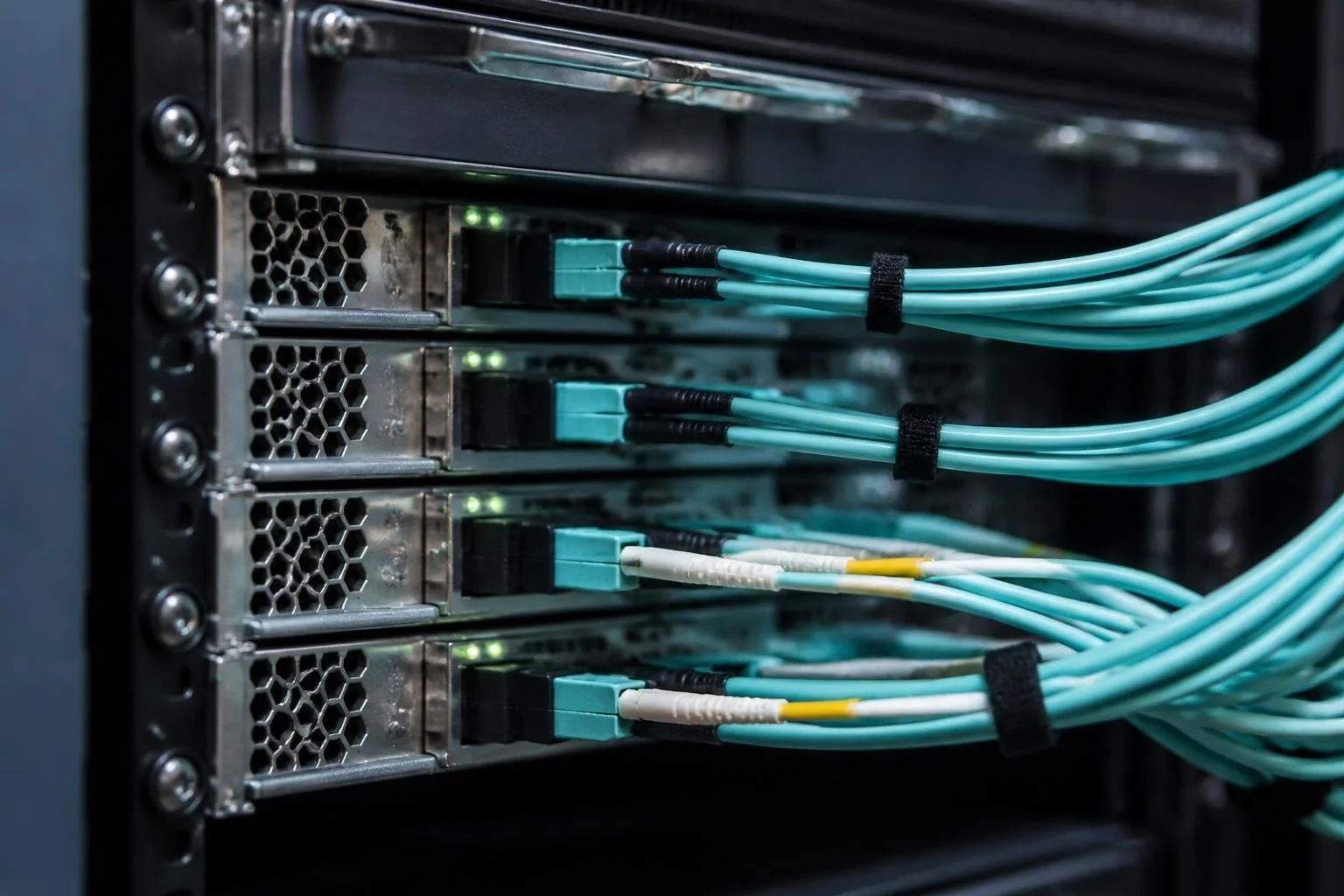
Your backbone must be ready for what’s coming, not just what’s here.
We design for:
10G minimum (often higher for enterprise and government)
Fiber-based infrastructure for scalability
Redundant pathways for failover
Because once your backbone is maxed out, everything slows down.
4. Segmentation and Traffic Management
A well-designed network separates traffic instead of forcing everything through one pipeline.
We implement:
VLAN segmentation
Dedicated bandwidth for critical systems
Isolation for security, AV, and operational systems
This ensures one system never overwhelms another.
5. Future-Proofing for Growth
Let’s be honest: growth is inevitable.
What’s optional is whether you plan for it.
We design infrastructure that allows for:
Additional users without rework
New systems without disruption
Expansion without downtime
That’s the difference between reacting and being ready.
Real-World Impact: What Happens When It’s Done Right
When bandwidth is properly planned:
✔ Video calls remain clear, even during peak hours
✔ Security systems operate without interruption
✔ Smart building systems respond instantly
✔ Teams stay productive
✔ IT teams spend less time troubleshooting
And most importantly…
Your network becomes an asset, not a liability.
Why This Matters for Project Managers and Contractors
If you’re managing a build, bandwidth planning directly impacts:
System performance
Client satisfaction
Long-term usability of the space
Your reputation as a project leader
When it’s done right:
✔ You deliver a building that performs
✔ You avoid future complaints
✔ You position yourself as a trusted partner
When it’s not:
Critical Environments Where Bandwidth Planning Is Non-Negotiable
This becomes even more important in:
Government facilities
Emergency Operations Centers (EOCs)
Healthcare environments
Tech campuses
Smart buildings
Transportation hubs
In these environments, performance isn’t optional. It’s mission-critical.
What Sets All Day Cable, Inc. Apart
We don’t guess. We don’t assume. We engineer.
With over 34 years of experience, we bring:
✔ Deep understanding of real-world network demand
✔ Strategic planning that aligns with operational goals
✔ Fiber-first infrastructure design
✔ Clean, scalable, and documented installations
✔ A reputation for delivering on time and on budget
And most importantly…
✔ A commitment to building networks that perform under pressure
Final Thought: Your Network Should Never Be the Weakest Link
Let me leave you with this:
When your building is complete…
Your network should be the strongest part of your infrastructure, not the weakest.
Because when bandwidth is planned correctly…
Everything just works.
Ready to Build a Network That Can Handle What’s Next?
If you’re planning a project, or questioning whether your current network can handle future demand, this is the moment to take action.
📅 Schedule a consultation with All Day Cable, Inc.
Or download our Capability Statement to see how we design high-performance networks
Let’s engineer a network that doesn’t just meet demand…
Let’s build one that outperforms it.