There’s a moment in every project where everything depends on a room most people never think about.
No windows. No design finishes. No spotlight.
Yet if it’s not done right… Everything else suffers.
I’m talking about your MDF and IDF rooms.
If you’re a project manager or general contractor, this is one of the most overlooked—and most critical—areas of your entire build. Because no matter how advanced your systems are…
Your network is only as strong as the infrastructure that supports it.
At All Day Cable, Inc., we’ve seen firsthand how proper MDF/IDF design can make a project run flawlessly—and how poor design can create long-term performance issues, delays, and costly rework.
Let’s walk through what you need to know before installation begins.
First, Let’s Get Clear: What Are MDF and IDF?
MDF (Main Distribution Frame)
This is your central hub:
Where service provider connections enter
Where core network equipment lives
Where backbone cabling originates
IDF (Intermediate Distribution Frame)
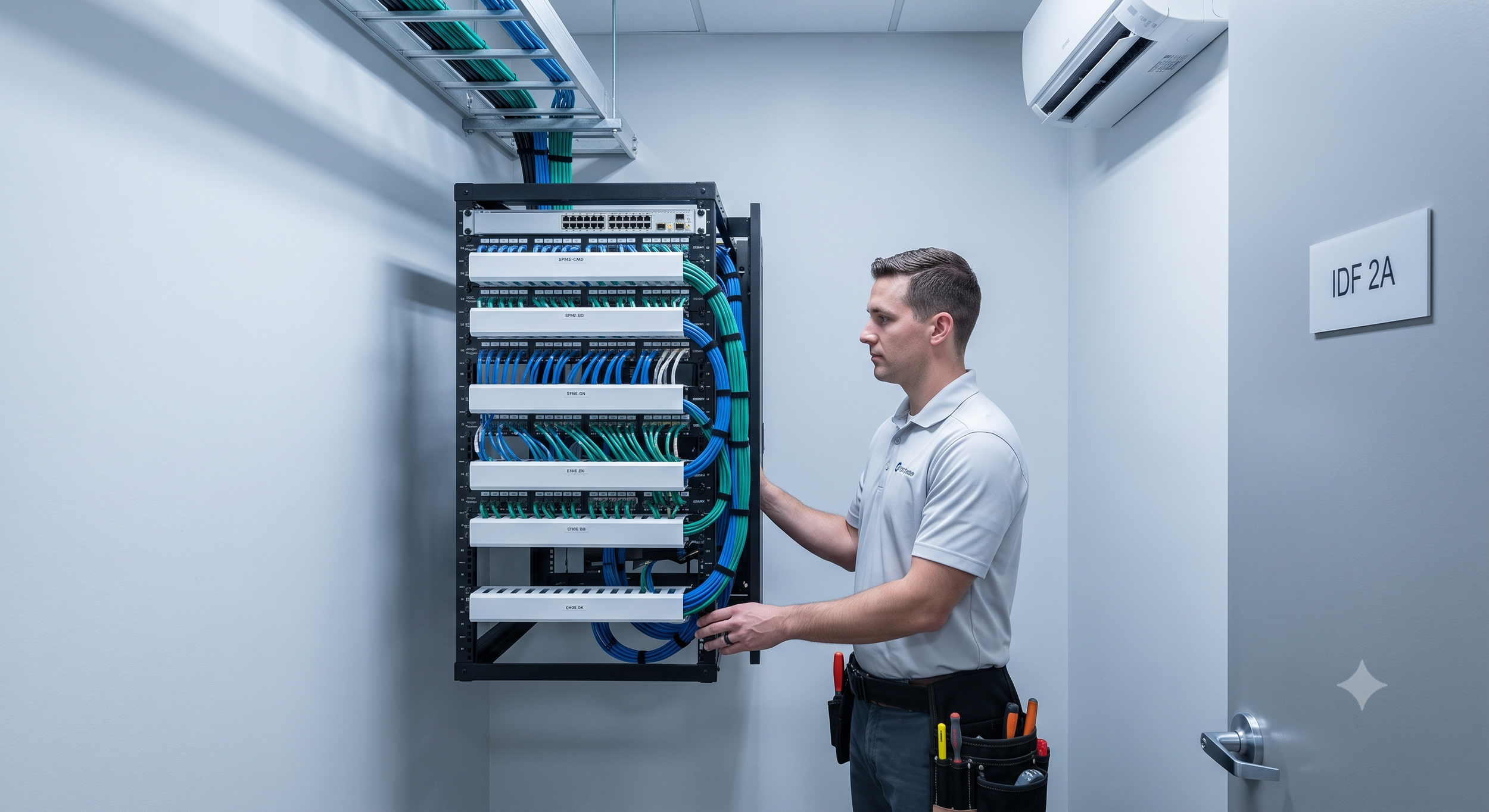
These are your distribution points:
Located throughout the building
Connecting end devices to the network
Supporting floor-by-floor or zone-based connectivity
Think of it like this:
MDF = the brainIDFs = the nervous system
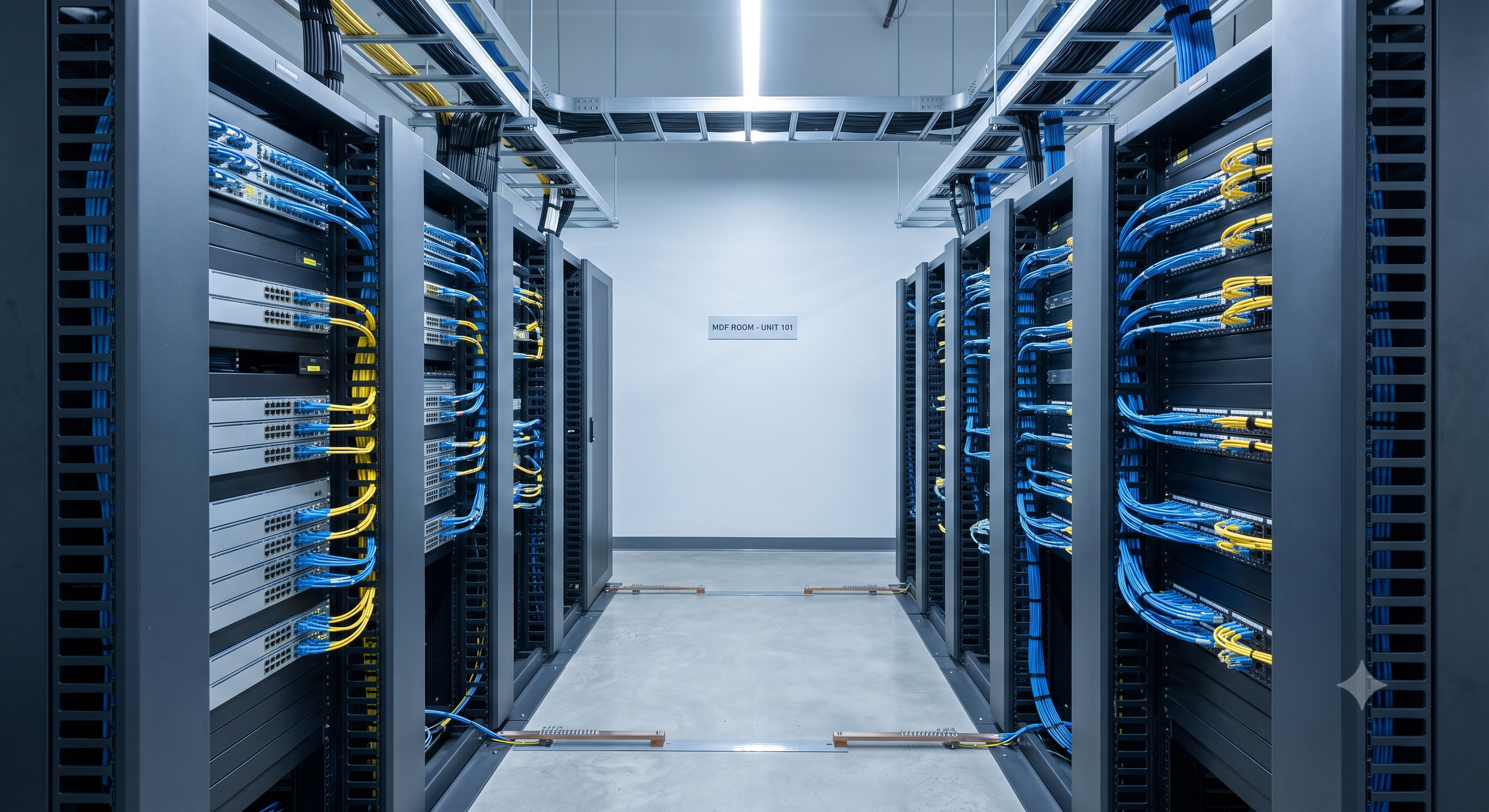
If either is poorly designed, the entire building feels it.
The Most Common MDF/IDF Mistakes (That Cost You Later)
Let me say this plainly—these mistakes happen more often than they should:
Rooms too small for equipment growthImproper cable pathways leading to congestion
And here’s what that leads to:
Network slowdowns
Equipment failure
Costly retrofits
Frustrated IT teams
Delays during turnover
These are avoidable—if you design it right from the start.
The Advanced Design Standards That Make the Difference
This is where we separate basic installs from high-performance infrastructure.
1. Right-Sizing the Space (Now and Future)
Your MDF/IDF rooms should never be designed for today only.
We plan for:
Equipment growth
Additional racks
Expansion of services (5G, IoT, AV, security)
Rule of thumb: If it feels “just enough,” it’s not enough.
2. Power Planning Done Right
Reliable power is non-negotiable.
We design for:
Dedicated electrical circuits
Redundant power feeds (for critical environments)
UPS (Uninterruptible Power Supply) integration
Proper grounding and bonding
Because when power fails… your entire network goes with it.
3. Cooling and Airflow Management
Heat is the silent killer of network performance.
We ensure:
Proper HVAC integration
Hot aisle / cold aisle airflow planning (for larger installs)
Equipment spacing for ventilation
Temperature monitoring capabilities
Overheating doesn’t just reduce performance—it shortens equipment life.
4. Cable Management and Pathways
This is where organization meets performance.
We implement:
Ladder racks and cable trays
Vertical and horizontal cable managers
Separation of fiber and copper pathways
Clean routing for easy identification and maintenance
Because a messy IDF today becomes a nightmare tomorrow.
5. Redundancy and Backbone Access
Your MDF and IDFs should support redundancy—not limit it.
We design:
Multiple backbone entry points
Diverse fiber pathways
Failover-ready routing
Especially for:
Government facilities
EOCs
Healthcare
Enterprise environments
Downtime is not an option in these spaces.
6. Security and Access Control
Your network rooms should never be “open access.”
We recommend:
Locked racks and cabinets
Controlled room access
Monitoring systems where needed
Separation from public or shared spaces
Because physical access = network vulnerability.
Why This Matters for Project Managers (More Than You Think)
Let me speak directly to you for a moment.
If you’re managing a project, MDF/IDF design impacts:
Your timeline
Your budget
Your coordination with trades
Your final delivery quality
When these rooms are designed properly:Inspections pass fasterTurnover is clean and professional
When they’re not: ❌You deal with rework ❌ You manage delays ❌ You field complaints ❌ You absorb the pressure
The difference is planning—and the right partner.
Designing for What’s Coming Next
Here’s where forward-thinking matters most.
Your MDF/IDF rooms must support:
10G → 40G → 100G network growth
5G small cell integration
Smart building systems
AI and data-heavy applications
Edge computing nodes
If your rooms aren’t built for this…
You’ll be rebuilding them sooner than you think.
What Sets All Day Cable, Inc. Apart in MDF/IDF Design
We don’t treat these rooms as an afterthought—we treat them as the core of your network performance.
With us, you get:
✔ Strategic space planning from the design phase
✔ Coordination with electrical, HVAC, and GC teams
✔ Clean, labeled, and documented installations
✔ Scalable infrastructure built for long-term use
✔ Proven performance backed by 34 years of experience
And most importantly…
A partner who understands how these decisions impact your entire project
Final Thought: The Rooms No One Sees Are the Ones That Matter Most
Your clients may never walk into your MDF or IDF.
They may never see the racks, the cable trays, or the fiber backbone.
But they will feel:
The speed
The reliability
The performance
That’s what these rooms control.
And when they’re done right…
Everything else just works.
Ready to Get Your Infrastructure Right from the Start?
If you’re planning a project—or reviewing designs now—this is the time to ensure your MDF and IDF are built for performance, scalability, and long-term success.
📅 Schedule a consultation with All Day Cable, Inc.
Or download our Capability Statement to see how we support high-performance projects
Let’s build your network from the inside out—the right way.